
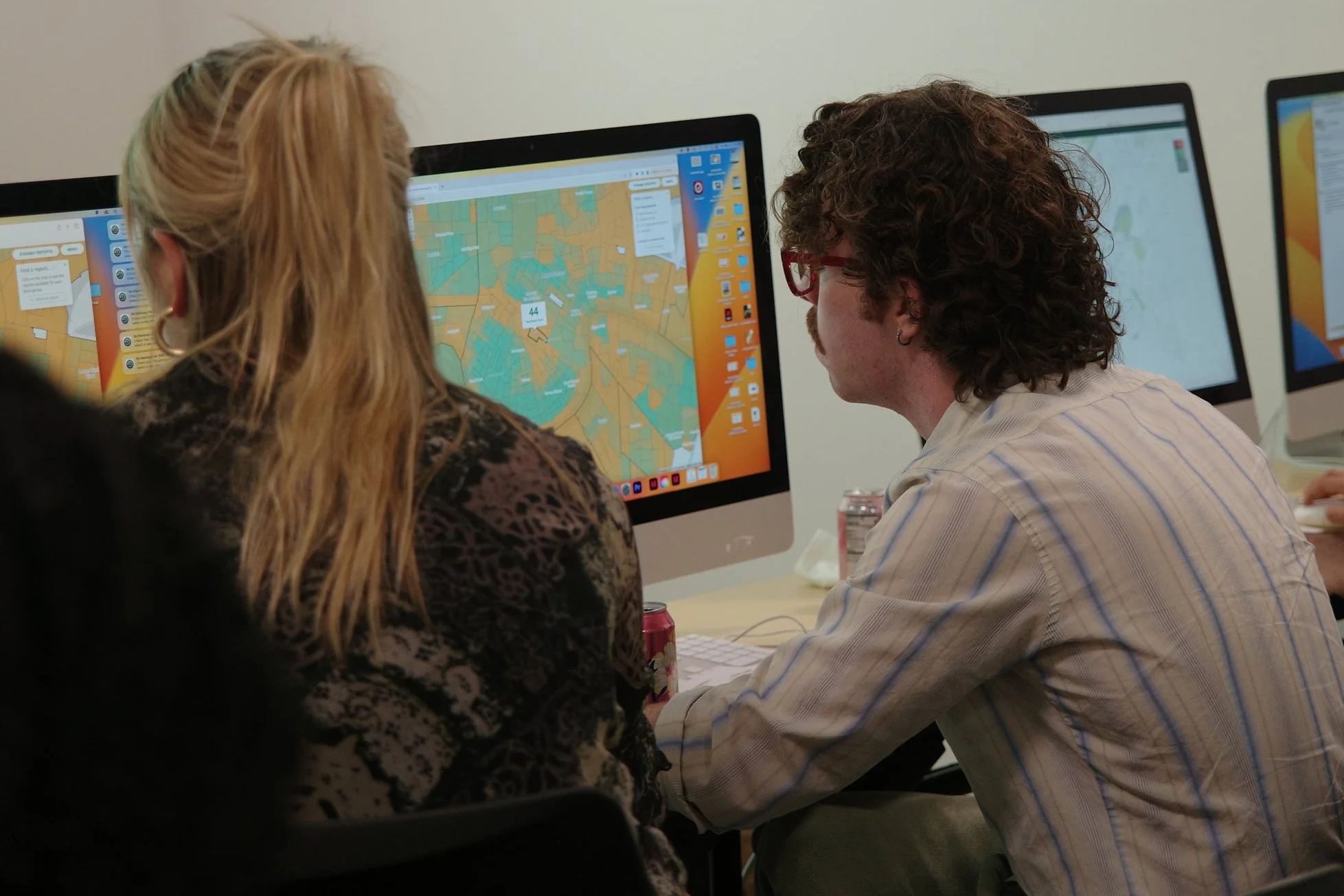

Introduced environmental justice, racism, and responsible tech. Students explored early GIS use and its ethical implications.

Examined how energy production and consumption create injustices. Learned about Indigenous land use, energy burden on low-income communities, and mapped energy infrastructure.

Focused on water access, quality, and sovereignty. Historical case studies included contamination in the San Joaquin Valley and Indigenous water rights.

Linked climate crisis to data storytelling. Topics included climate migration, air quality disparities, and how data can be used for advocacy.

Themes included coalition-building, regenerative futures, and how to use GIS for policy change.